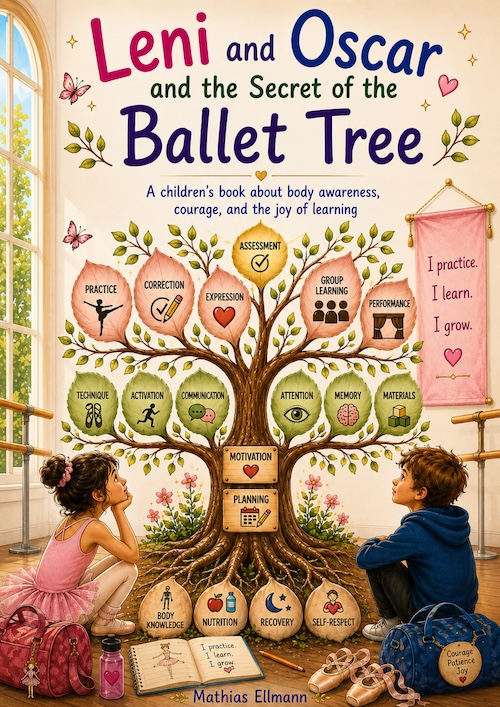
Leni and Oscar and the Secret of the Ballet Tree
A literary children’s story about body awareness, courage, patience, ballet, and the joy of learning.
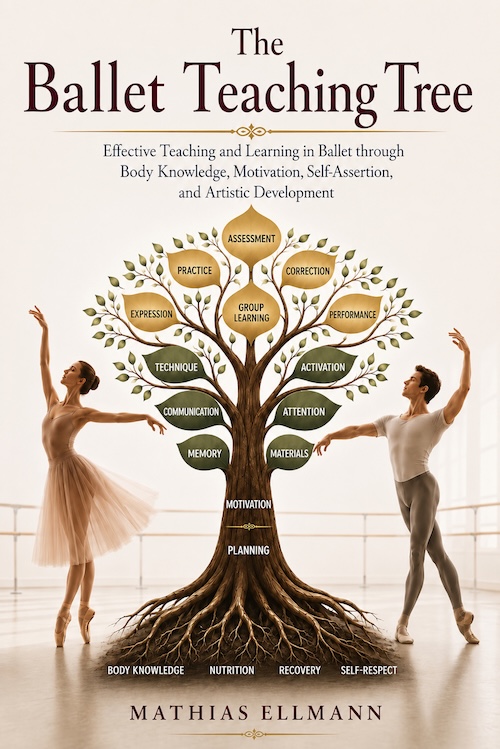
Effective Teaching and Learning in Ballet through Body Knowledge, Motivation,
Self-Assertion, and Artistic Development
by Mathias Ellmann
ISBN: 978-3-6952-6153-6
Ballet is often understood through form, discipline, and repetition. Yet ballet is more than imitation: it is a complex learning process in which body knowledge, motivation, self-respect, communication, and artistic development work together.
The Ballet Teaching Tree demonstrates how ballet instruction can be planned, motivating, body-aware, communicatively clear, and development-oriented.
Central themes include planning, motivation, body knowledge, nutrition, recovery, prevention, activation, attention, memory, teaching materials, communication, correction, fair self-assertion, assessment, and artistic expression.
This book is intended for ballet teachers, dancers, dance educators, instructors, parents, ballet schools, training institutions, students, educators, and anyone who wishes to understand ballet not merely as technique, but as a healthy, conscious, and artistic learning journey.
The book is available as an eBook. Available purchase links can be found below.
| ISBN | 978-3-6952-6153-6 |
|---|---|
| Format | eBook |
Why ballet is more than imitation, form, discipline, and repetition.
How instruction provides orientation and how motivation supports both technical and artistic development.
Why ballet technique must be understood functionally and developed in a physically responsible way.
How energy supply, recovery, and prevention contribute to long-term resilience and performance.
How feedback can be technically precise, effective for learning, and free from shaming.
How self-respect, personal boundaries, and artistic development interact in ballet education.
The accompanying presentation provides a concise introduction to the book’s central idea: ballet becomes more sustainable when it is taught and learned consciously, in a body-appropriate way, with motivation, and with a focus on artistic development.
You can view the presentation directly in your browser, open the PDF, or download it.
A literary children’s story about body awareness, courage, patience, ballet, and the joy of learning.
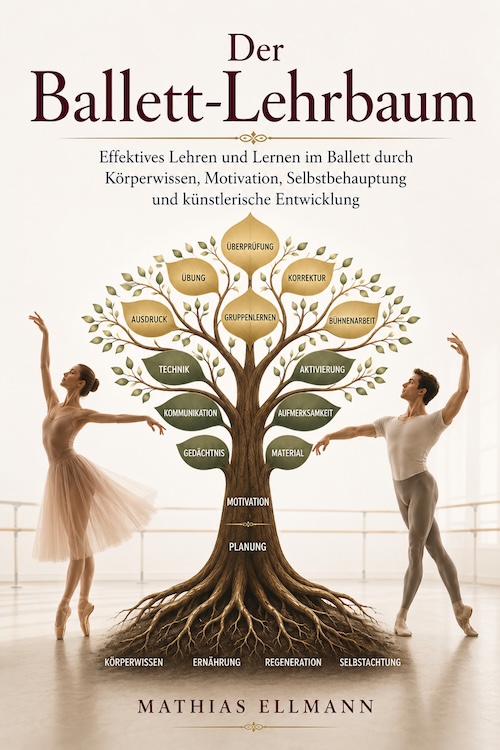
Der Ballett-Lehrbaum ist auch in deutscher Sprache erhältlich.
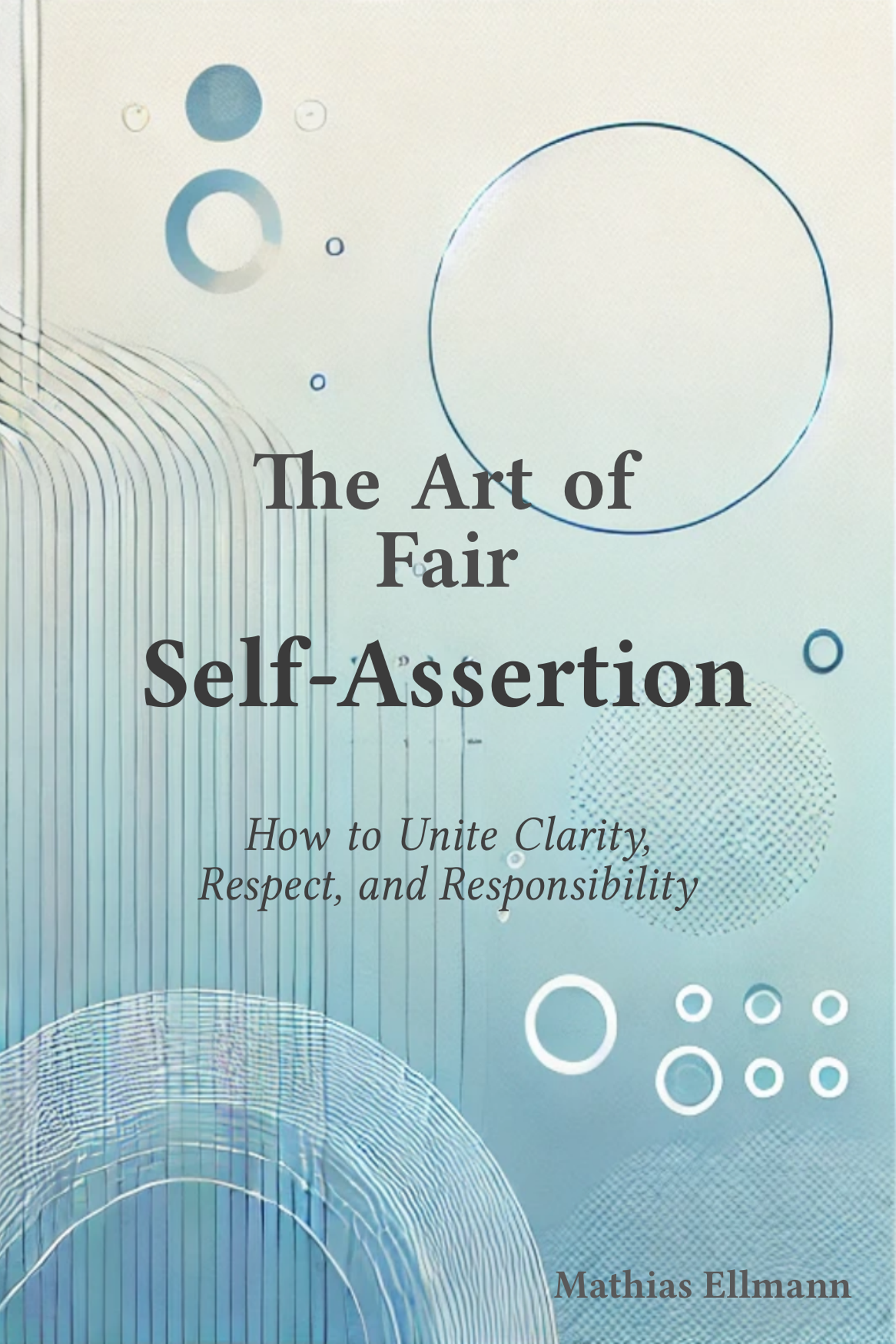
A specialist book about clarity, fairness, responsibility, boundaries, and respectful communication.
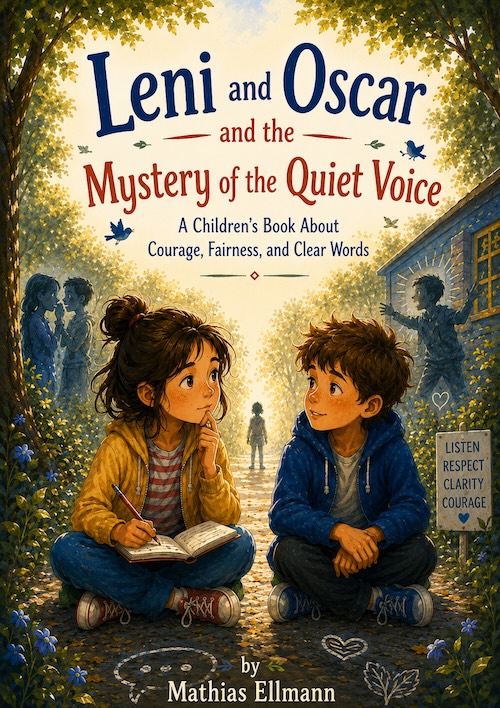
A children’s story about courage, fairness, self-assertion, listening, and clear words.
The book shows how ballet instruction can be designed consciously, in a body-appropriate, motivating, and artistically development-oriented way. It focuses on body knowledge, planning, motivation, communication, recovery, fair self-assertion, and artistic expression.
The book is intended for ballet teachers, dancers, dance educators, instructors, parents, ballet schools, training institutions, students, and anyone who wants to understand ballet as a healthy, conscious, and artistic learning journey.
The Ballet Teaching Tree is an orientation model for ballet instruction. It connects roots such as body knowledge, nutrition, recovery, and self-respect with planning, motivation, technique, communication, attention, memory, correction, expression, and assessment.
Ballet is not only technique and imitation. It is a physical, psychological, social, and artistic learning process. For this reason, instruction, correction, motivation, body knowledge, health, and artistic development must be considered together.
Body knowledge is treated as a foundation of responsible ballet pedagogy. Movements should not merely appear externally correct, but be built in a functional, sustainable, and body-appropriate way.
Yes. The book discusses nutrition, energy availability, hydration, sleep, recovery, workload, resilience, and injury prevention as important foundations for long-term development in ballet.
Fair self-assertion means taking one’s own body seriously, recognizing boundaries, accepting corrections without self-devaluation, and connecting achievement with self-respect and personal dignity.
No. Classical technique is important, but the book places it within a broader framework of planning, motivation, body knowledge, communication, attention, memory, recovery, correction, assessment, and pedagogical responsibility.
Yes. The content is suitable for workshops, lectures, and practical formats for ballet schools, dance educators, training institutions, associations, educational organizations, and artistic training programs.
The book is available as an eBook, including through Amazon Kindle, Thalia, Hugendubel, and eBook.de.
The content of the book can be presented as a lecture, workshop, or moderated practical format for ballet schools, dance educators, training institutions, associations, educational organizations, and artistic training programs.
The focus is on body knowledge, motivation, lesson planning, communication, correction, recovery, fair self-assertion, and the development of a healthy, conscious, and artistically sustainable learning pathway.