Clarity and conviction
Work out where you stand and express your position in words the other person can understand.
How to Unite Clarity, Respect, and Responsibility
by Mathias Ellmann
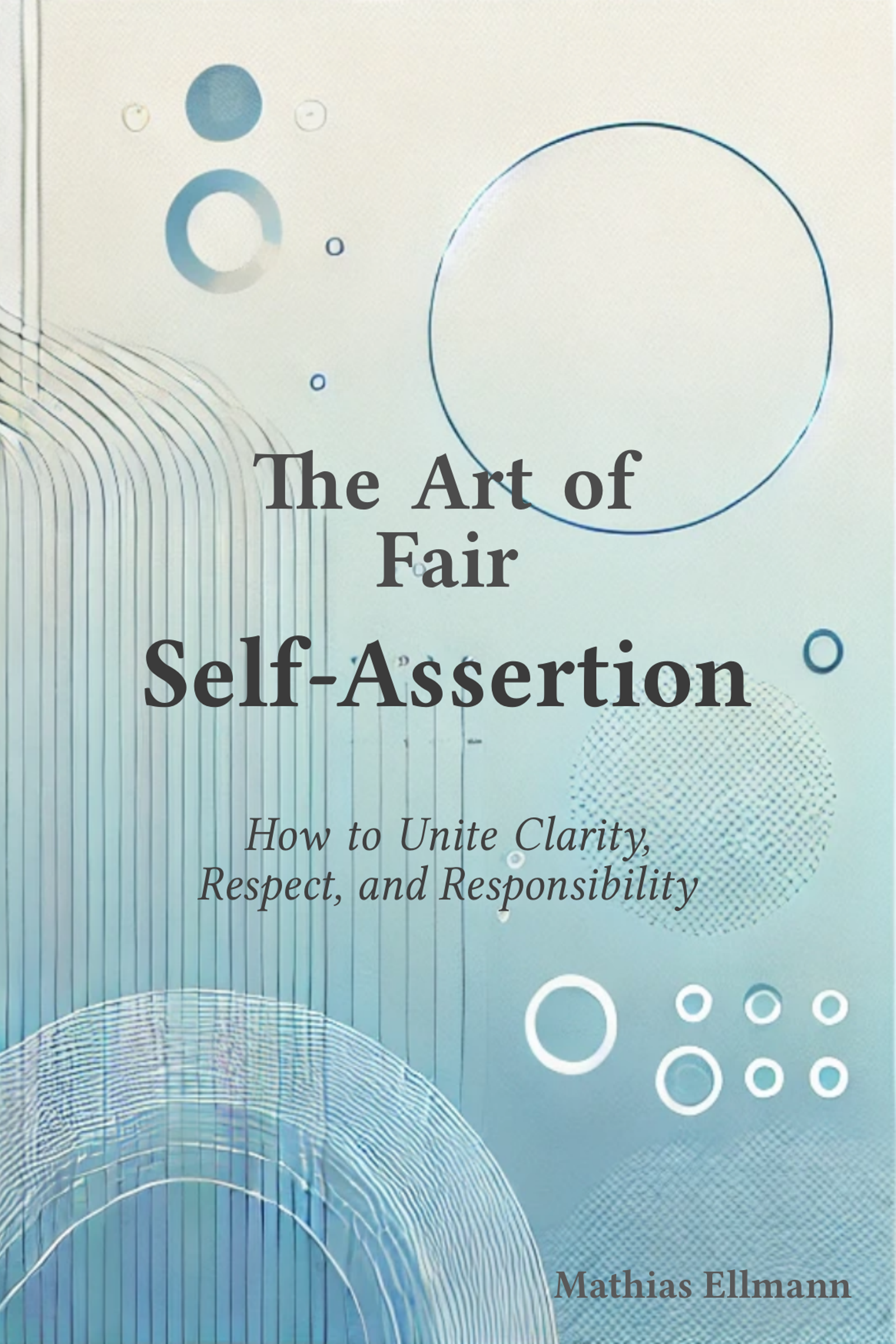
English e-book (EPUB)
ISBN 978-3-7554-9051-7
When a conversation becomes difficult, it can be hard to say what matters to you and still hear what matters to the other person. Mathias Ellmann examines how to express your needs, set boundaries and stand by your position while respecting other people’s dignity and freedom to make their own choices.
The book brings together communication psychology, conflict resolution and practical self-assertion. It explores how words, tone of voice and body language shape what others hear, and how to recognise pressure or manipulation before it takes over a conversation.
For readers who want to speak up more clearly, set boundaries and handle disagreement respectfully. The examples are relevant to conversations at work and at home, including for teachers, managers, teams, coaches and students.
Published by BookRix. ISBN 978-3-7554-9051-7 identifies the English EPUB edition.
Work out where you stand and express your position in words the other person can understand.
Notice when a boundary has been crossed and practise saying what needs to change.
Listen to a different account of what happened, spell out a request and decide what you are prepared to negotiate.
Identify blame-shifting, emotional pressure and attempts to dominate an exchange.
Consider how phrasing, tone, pace, posture and gestures work together, especially when you need to say no.
Take your own needs seriously, allow room for other people’s legitimate interests and consider the consequences of what you say and do.
The English companion page explains how the approach takes shape in the story of Leni and Oscar.
Explore how the two books connectDie deutsche Buchseite verlinkt die Präsentation, die Werkanalyse und die Wissensseiten zum Buch.
Deutsche Buchseite öffnenTalk to Mathias Ellmann about a session on clear communication, setting boundaries or dealing with difficult conversations. Include the intended audience, the topic you want to work on and your preferred dates.
It means expressing your position, needs and boundaries clearly while respecting the rights and autonomy of others and taking responsibility for your response.
It looks at what you say, how you sound and what your body language conveys. It also covers setting boundaries, recognising manipulation and responding to disagreement.
This page presents the English-language e-book, The Art of Fair Self-Assertion. You can also visit the German book page for that edition and its resources.