The Whisperer
Withdrawal and silence
The Whisperer represents falling silent out of fear. Those who remain silent for too long may be unable to make important needs, observations, and boundaries visible.

NONFICTION · CHILDREN'S BOOK · COMMUNICATION · RESPONSIBILITY
Two connected books show how people can express their needs and boundaries clearly without dominating, demeaning, or manipulating others.
A voice does not have to be the loudest. Fair self-assertion combines clarity about one's own needs and boundaries with respect for the dignity and autonomy of others.
A SHARED EDUCATIONAL AND ETHICAL BOOK PROJECT
“The Art of Fair Self-Assertion” develops the ethical and communicative foundations of clear, respectful, and responsible self-assertion. “Leni and Oscar and the Mystery of the Quiet Voice” translates these ideas into an age-appropriate story about courage, fairness, clear words, mistakes, and development.
The nonfiction book does not treat self-assertion as the mere enforcement of personal interests. It connects personal needs, rights, and boundaries with respect for the dignity and autonomy of others.
The children's book presents this tension through Leni and Oscar: Leni notices a great deal but initially remains silent for too long. Oscar is courageous but sometimes reacts faster and more loudly than the situation requires. Both learn a third path between withdrawal and attack.
The concept of fair self-assertion
Express observations, feelings, needs, wishes, and boundaries clearly and understandably in words.
Use tone, volume, speaking pace, and emphasis consciously and appropriately.
Use posture, gestures, facial expressions, and eye contact in ways that support the spoken message.
The dignity, boundaries, and autonomy of others are taken into account.
People take responsibility for their words, actions, intentions, and possible consequences.
Personal interests are represented without disregarding the legitimate interests and rights of others.
Notice → recognize feelings → name needs → state a boundary → speak calmly → listen → take responsibility
Four paths in conflict
The Whisperer
The Whisperer represents falling silent out of fear. Those who remain silent for too long may be unable to make important needs, observations, and boundaries visible.
The Shouter
The Shouter tries to win through volume, pressure, or intimidation. This can intensify the conflict and push aside other perspectives.
The Twister
The Twister changes statements or contexts to gain an advantage. Any short-term effect comes at the expense of trust and clarity.
The clear voice
The clear voice connects awareness, courage, truth, respect, and responsibility. It protects one's own dignity without violating the dignity of others.
Thematic connection
Foundations
The nonfiction book explains what fair self-assertion means, why it matters, and how it differs from dominance, manipulation, avoidance, and selfish enforcement.
Communication
Fair self-assertion is not created by suitable words alone. Tone, volume, posture, gestures, facial expression, and eye contact also influence its effect.
Children's book
Leni and Oscar experience concrete conflicts, mistakes, misunderstandings, and developmental steps. This makes fairness, clarity, and responsibility tangible through story.
Development
The children's book shows that a clear voice does not have to be present at all times. It can be sought, practised, lost, and found again.
The two books
Each book can be read independently. Together they form an educational and communication project about clear communication, fair boundary-setting, courage, respect, and responsibility.
NONFICTION · COMMUNICATION · ETHICS · SELF-ASSERTION
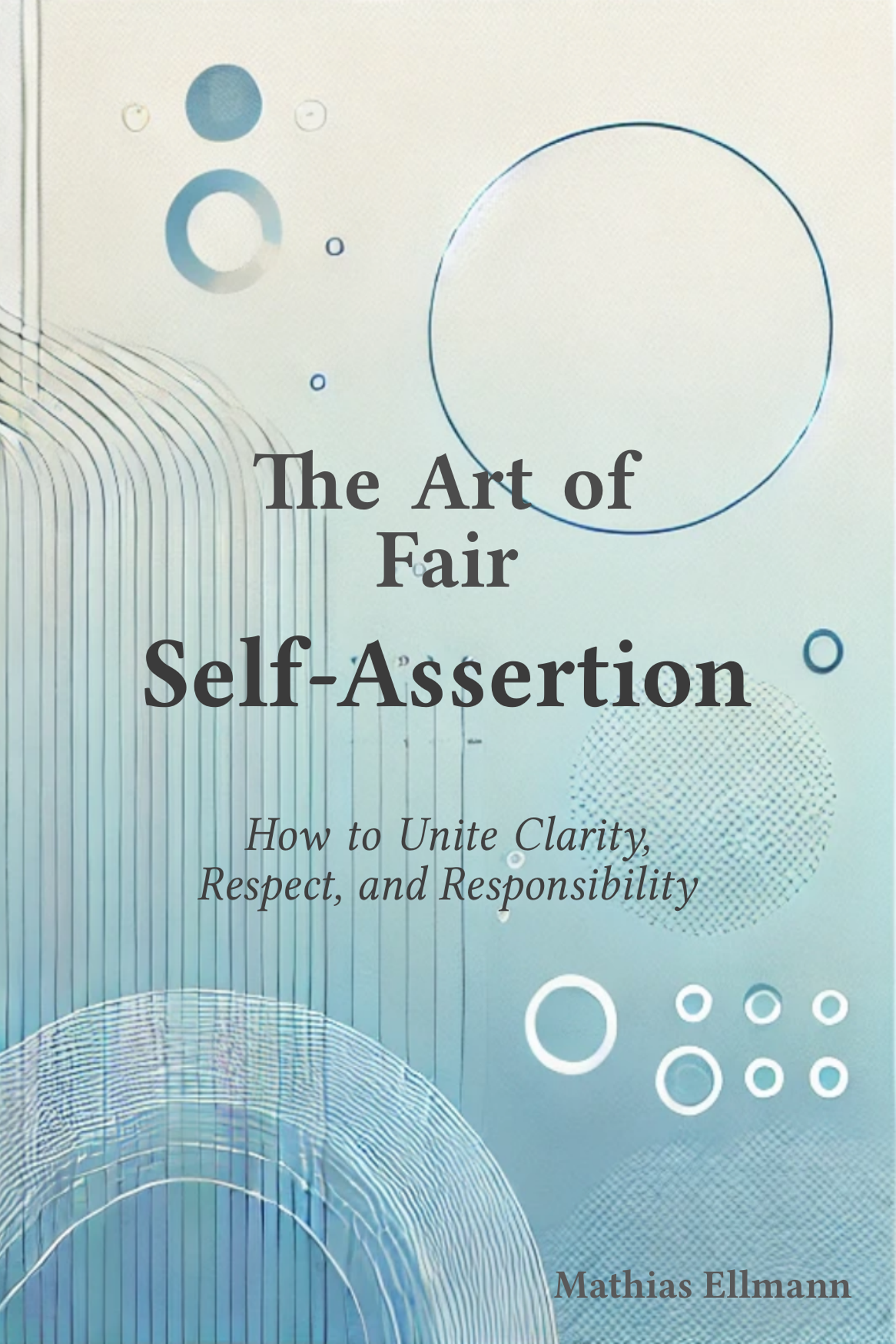
How to Unite Clarity, Respect, and Responsibility
The nonfiction book develops an ethically and communicatively grounded concept of self-assertion. It focuses on personal needs and boundaries, respect for others, responsibility for one's own actions, and communication that is as coherent as possible.
CHILDREN'S BOOK · COURAGE · FAIRNESS · CLEAR WORDS
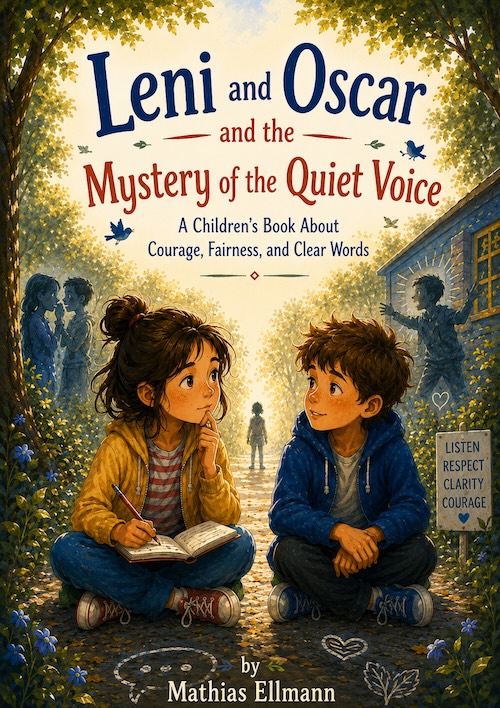
A Children's Book About Courage, Fairness, and Clear Words
The children's book translates the central ideas of fair self-assertion into a story. Leni and Oscar discover why silence, shouting, and twisting the truth are not sustainable solutions and how a clear voice can develop.
Shared competencies
Recognize and distinguish observations, feelings, needs, and boundary violations more precisely.
Express personal concerns clearly without threatening, demeaning, or deliberately distorting statements.
Use volume, tone, posture, gestures, and eye contact in ways that support the message.
Say no, create distance, and seek help when a situation cannot be resolved safely alone.
Consider other perspectives without giving up one's own needs and rights.
Recognize personal mistakes, take their effects seriously, and adjust one's behaviour.
Distinguish between withdrawal, attack, manipulation, and a respectful, clear response.
Do not act too hastily, but do not remain silent indefinitely when something is unfair or harmful.
Different forms of assertion
A clear refusal is not automatically aggressive. Likewise, giving in is not automatically respectful. What matters are the situation, safety, intention, expression, power relations, and consequences for everyone involved.
Audiences
Personal development
For reflecting on personal communication patterns, needs, boundaries, conflicts, and responsibility.
Family
For conversations about courage, saying no, fairness, listening, boundaries, and safe support.
Education
For conflict resolution, class councils, discussion rules, bullying prevention, and a culture of clear words.
Children's book
For a narrative exploration of fear, courage, volume, truth, fairness, and responsibility.
Organizations
For respectful communication, boundary-setting, collaboration, and constructive conflict management.
Support
For workshops and reflection formats on communication, self-respect, conflict competence, and responsibility.
Scope and limitations
Self-assertion does not mean having to resolve every dangerous situation alone. In cases of violence, abuse, immediate danger, severe bullying, or major power imbalances, protection, distance, trusted adults, and appropriate professional support are more important than immediate direct confrontation.
Frequently asked questions
Yes. The nonfiction book develops the ethical and communicative foundation of fair self-assertion. The children's book translates these ideas into an age-appropriate story about courage, fairness, clear words, boundaries, and responsibility.
Fair self-assertion means expressing one's own needs, rights, and boundaries clearly without dominating, demeaning, or manipulating others. It combines clarity with respect, responsibility, and fairness.
The nonfiction book distinguishes verbal, paraverbal, and nonverbal communication. Words, tone, volume, posture, gestures, facial expression, and eye contact should work together as coherently as possible.
Leni notices a great deal but initially remains silent for too long. Oscar intervenes courageously but sometimes reacts too quickly and too loudly. Both learn a third path between withdrawal and attack: speaking clearly, truthfully, and fairly.
The Whisperer represents withdrawal and silence, the Shouter represents dominance and escalation, and the Twister represents manipulation and untruth. The clear voice represents a responsible path beyond these problematic patterns.
No. The books provide orientation, language, and opportunities for reflection. In cases of violence, abuse, immediate danger, severe bullying, or complex psychological distress, they do not replace professional help, protective measures, or legal advice.
The nonfiction book is intended for adults, parents, teachers, leaders, educationally interested readers, and people who want to reflect on their communication. The children's book is intended for children, families, schools, and educational institutions.
For workshops, seminars, readings, educational formats, professional discussions, or questions about the two books, you can make contact by telephone or email. Content, audience, duration, and fees are agreed in advance.
Please send sensitive or confidential documents only through a secure transmission method agreed in advance. Time-critical deadlines are accepted only after explicit confirmation.