Ballet education
Structure teaching systematically
The nonfiction book brings planning, technique, workload, communication, motivation, recovery and evaluation together in one orientation model.

Nonfiction · Children's Book · Ballet Education · Healthy Learning
Two independent books connect ballet education, body knowledge, motivation, fair self-assertion, technique, artistic expression and the joy of learning.
Ballet is more than technique and visible performance. Good learning requires physical foundations, recovery, motivation, attention, clear communication, fair correction and time for development.
A shared educational book project
“The Ballet Teaching Tree” develops a systematic model for reflective teaching and learning in ballet. “Leni and Oscar and the Secret of the Ballet Tree” translates this structure into an age-appropriate story involving movement, mistakes, feelings, corrections and developmental steps.
Their shared starting point is this: learning ballet does not succeed through repetition, discipline and technical instruction alone. Sustainable development arises when health, self-respect, motivation, attention, communication, practice and artistic expression work together.
The Ballet Teaching Tree model
Body knowledge, nutrition, recovery and self-respect.
Planning and motivation as the supporting orientation.
Technique, activation, communication, attention, memory and learning materials.
Practice, correction, expression, group learning and stage work.
Evaluation, feedback and further development.
Healthy foundations → motivated learning → technique and attention → practice and expression → evaluation and further development
Thematic connection
Ballet education
The nonfiction book brings planning, technique, workload, communication, motivation, recovery and evaluation together in one orientation model.
Body knowledge
Bodily signals, capacity, recovery and individual limits are treated not as obstacles, but as important information for learning.
Children's book
Leni, Oscar and the other children discover that mistakes, breaks, attention, courage and fair correction are part of the learning process.
Self-respect
Corrections should show possible paths rather than shame. Technical development should not displace health and self-respect.
The two books
Each book can be read independently. Together they form a teaching, learning and communication project for ballet education, body awareness, motivation and artistic development.
Ballet Education · Body Knowledge · Motivation · Teaching
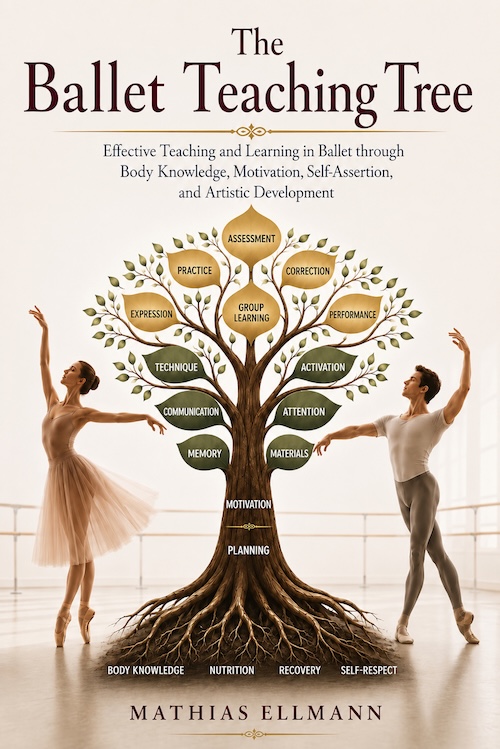
Effective teaching and learning in ballet through body knowledge, motivation, self-assertion and artistic development
The nonfiction book develops a comprehensive orientation model for healthy, effective and reflective teaching and learning. It connects physical foundations, lesson planning, learning psychology, technique, communication, correction, artistic expression and evaluation.
Children's Book · Body Awareness · Courage · Joy of Learning
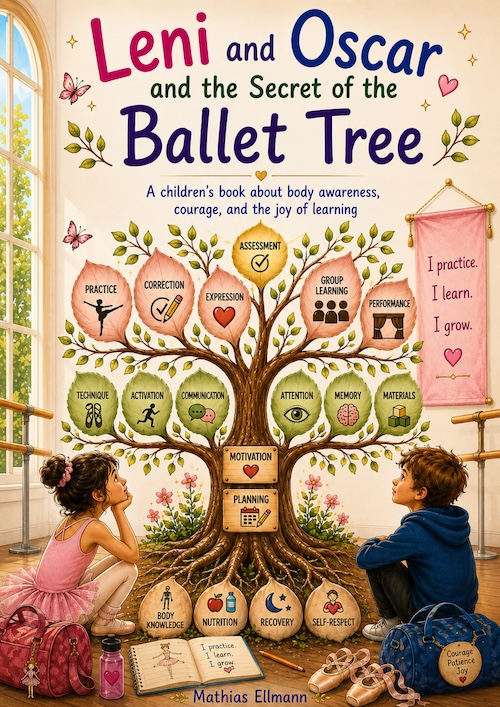
A children's book about body awareness, courage and the joy of learning
The children's book translates the Ballet Teaching Tree into a narrative learning journey. The children discover why attention, breaks, courage, practice, fair words and respectful treatment of their own bodies belong together.
Shared competencies
Notice workload, tension, fatigue, pain and recovery as important forms of information.
Understand goals, practise meaningfully, use feedback and reflect on learning progress.
Connect ambition, joy, self-efficacy and long-term development.
Express personal limits and needs clearly without abandoning willingness to learn or responsibility.
Understand movement not only through imitation, but physically, functionally and musically.
Bring technique, attention, feeling, music and personal shaping together in a dance statement.
Use correction as support and distinguish between clear instruction, criticism and humiliation.
Review development regularly and adjust goals, workload, teaching and learning paths.
Two approaches to teaching
Not every form of effort, correction or technical repetition is problematic. What matters is whether it is understandable, appropriately dosed and embedded in a respectful, health-oriented learning process.
Audiences
Teaching
For lesson planning, workload management, motivation, communication, correction and long-term development.
Learning
For a better understanding of the body, technique, learning processes, limits and artistic development.
Family
For supporting motivation, workload, bodily signals, self-respect and the joy of learning.
Education
For teaching culture, professional development, quality improvement, health protection and educational orientation.
Children's book
For conversations about courage, mistakes, body awareness, practice, fair words and the joy of development.
Support
For an interdisciplinary view of movement, learning, motivation, health and self-respect.
Scope and limitations
The Ballet Teaching Tree is an orientation model, not a rigid, fully standardized teaching method. Real teaching situations must be assessed individually according to age, health, experience, level of performance, motivation and environment.
Frequently asked questions
No. The two titles are independent books. In content, however, they form a shared educational book project: the nonfiction book develops the Ballet Teaching Tree as an orientation model, while the children's book translates the structure into an age-appropriate learning story.
The tree represents a connected process of learning and development. The roots include body knowledge, nutrition, recovery and self-respect. The trunk stands for planning and motivation. The branches connect technique, activation, communication, attention, memory and learning materials. The leaves represent practice, correction, expression, group learning and stage work. The top represents evaluation.
The nonfiction book explains the model systematically and connects ballet education, body knowledge, learning psychology, motivation, communication and self-assertion. The children's book makes the same principles tangible through characters, movement, mistakes, feelings, corrections and developmental steps.
Technique is important, but it is not treated in isolation. The books place technical development within a broader framework of health, motivation, self-respect, communication, recovery and artistic expression.
No. The books provide educational orientation and learning models. They do not replace medical examination, physiotherapy, psychotherapy, nutritional assessment or individual training plans.
The nonfiction book is intended for ballet teachers, learners, schools, parents and readers interested in education. The children's book is intended for children, families and educational settings in which body awareness, courage, attention and the joy of learning are to be strengthened.
For workshops, seminars, teaching, professional discussions or questions about individual books, you can make contact by telephone or email. Content, audience, duration and fees are agreed in advance.
Please send sensitive or confidential documents only through a secure transmission method agreed in advance. Time-critical deadlines are accepted only after explicit confirmation.