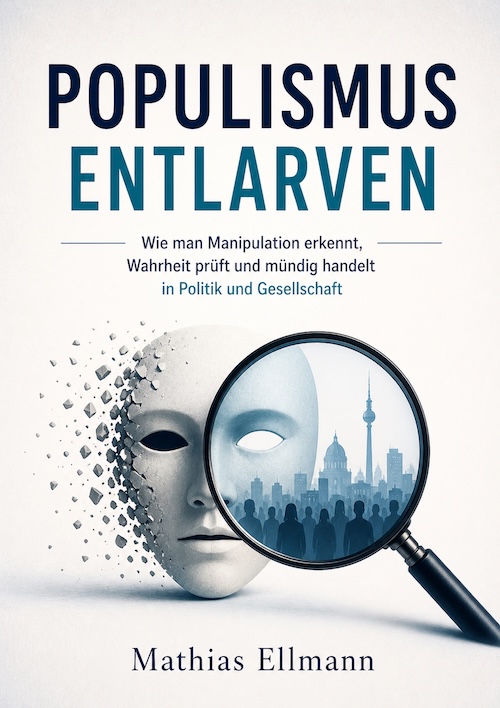
Populismus entlarven
The German edition of Unmasking Populism: how to recognize manipulation, evaluate truth, and act as an enlightened citizen in politics and society.
How to Recognize Manipulation, Evaluate Truth, and Act as an Enlightened Citizen
in Politics and Society
by Mathias Ellmann
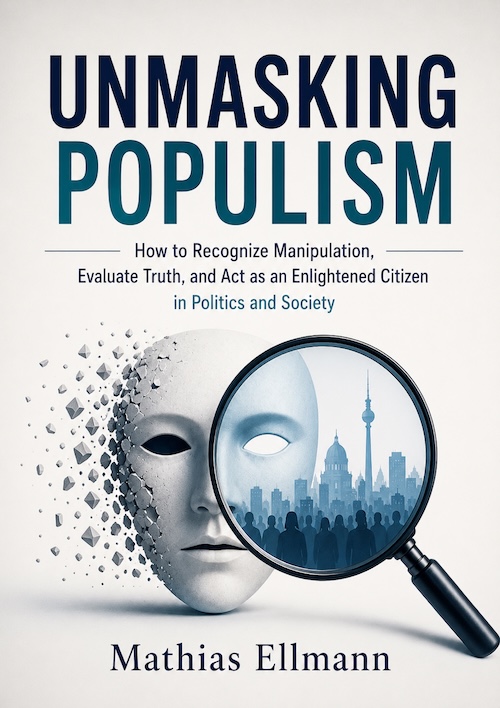
ISBN: 978-3-6952-6311-0
Populism works not only through its content, but also through recurring communication patterns: simplification, emotionalization, enemy images, repetition, and insulation against criticism.
Unmasking Populism examines how political manipulation works, how truth can be evaluated, and how people can act responsibly as enlightened citizens in politics and society.
The book addresses cognitive biases, rhetorical simplification, enemy image construction, propaganda, attention, fear, belief and knowledge, logical fallacies, and democratic responsibility.
It combines political analysis, psychology, philosophy, logic, and practical tools for critical thinking and structured decision-making.
The book is intended for citizens, teachers, students, managers, organizations, educational institutions, consultants, journalists, and readers who want to understand political communication, manipulation, and democratic judgment more clearly.
The English-language Kindle edition of Unmasking Populism is available from Amazon.
The people-versus-elite opposition, simplification, emotionalization, personalization, and anti-pluralist communication patterns.
Enemy images, fear, repetition, felt truth, selective perception, and rhetorical reduction.
Distinguishing facts, interpretations, sources, logical conclusions, and alternative explanations.
Confirmation bias, the availability heuristic, anchoring, group affiliation, and selective perception.
Structuring problems, objectives, alternatives, consequences, and trade-offs using the PrOACT model by Hammond et al.
Enlightened citizenship, Fair Self-Assertion, constructive dialogue, and democratic responsibility.
An English-language presentation accompanying Unmasking Populism is currently being prepared.
The presentation will provide a concise and visually structured introduction to the book’s central topics, including populist communication, manipulation, cognitive biases, the information iceberg, logical fallacies, the PrOACT model by Hammond et al., Fair Self-Assertion, and democratic responsibility.
Once available, the presentation will be viewable directly in the browser and downloadable as a PDF.
The German edition of Unmasking Populism: how to recognize manipulation, evaluate truth, and act as an enlightened citizen in politics and society.
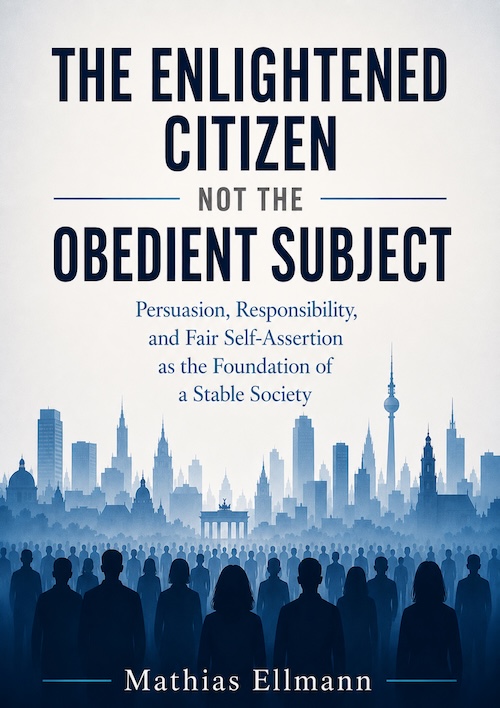
A book about persuasion, responsibility, Fair Self-Assertion, enlightened citizenship, legitimate power, democracy, and stable social order.
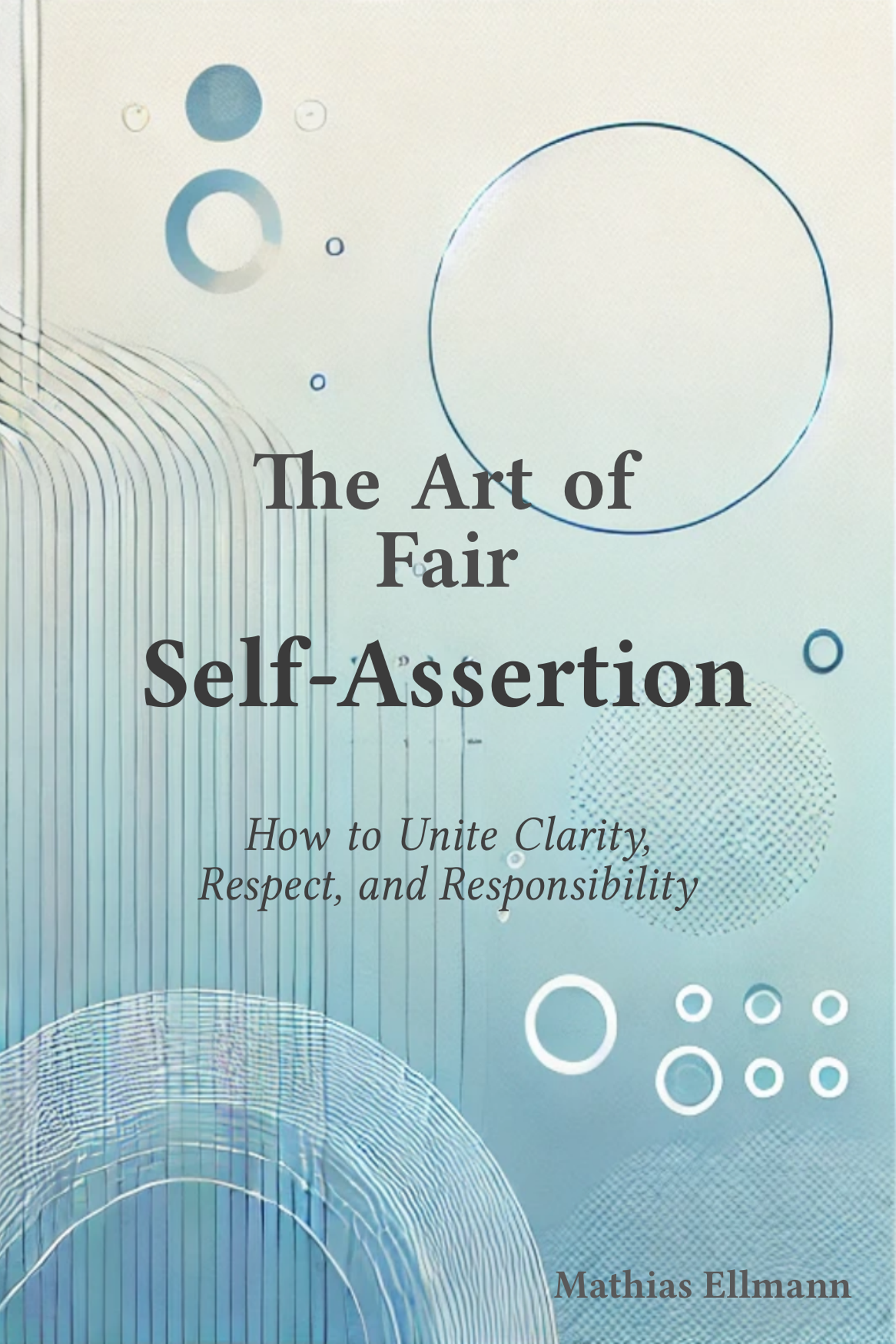
A practical book about clarity, respect, responsibility, boundaries, and expressing one’s position without dominance, manipulation, or submission.

A children’s book about courage, fairness, listening, clear words, responsibility, and finding one’s own voice.
The book examines how populist communication works, how manipulation can be recognized, and how people can evaluate information critically without becoming manipulative themselves.
The book is intended for citizens, teachers, students, managers, organizations, educational institutions, and anyone seeking a deeper understanding of political communication, manipulation, and enlightened citizenship.
It means refusing to accept information uncritically and consciously examining claims, sources, arguments, and one's own reactions.
Legitimate criticism relies on arguments, verifiable information, and a willingness to differentiate. Populist communication reduces complex issues, intensifies emotions, constructs enemy images, and frequently insulates itself against criticism.
It means distinguishing facts from interpretations, examining sources, testing logical conclusions, and considering alternative explanations.
The PrOACT model by Hammond et al. helps readers examine problems, objectives, alternatives, consequences, and trade-offs systematically. It supports deliberate decision-making under influence and emotional pressure.
Cognitive biases help explain why simplified, emotional, or repeatedly presented messages often appear more convincing than nuanced analysis. Understanding these mechanisms supports more reflective judgment.
Yes. Its content is suitable for workshops, lectures, and reflection formats addressing populism, manipulation, truth, judgment, democratic responsibility, and critical thinking.
The book's content can be adapted as a lecture, workshop, or moderated reflection format for civic education, organizations, educational institutions, managers, teams, and socially engaged groups.
The focus is on practical questions: How does populism work? How are enemy images created? How can facts be distinguished from interpretations? How can truth be evaluated? And how can democratic judgment be strengthened in practice?
Identify recurring communication patterns such as simplification, emotionalization, enemy image construction, and repetition.
Work with source evaluation, argument analysis, logical fallacies, and the distinction between fact and interpretation.
Develop practical tools for critical thinking, democratic responsibility, Fair Self-Assertion, and constructive dialogue.
For enquiries about books, lectures, training programmes, or professional collaboration: