Reality, Data, and Observation
Why data are representations rather than reality itself, how measurement frames shape what becomes visible, and why observation, description, and explanation must remain distinct.
From Observation to Responsible Decision-Making
by Mathias Ellmann
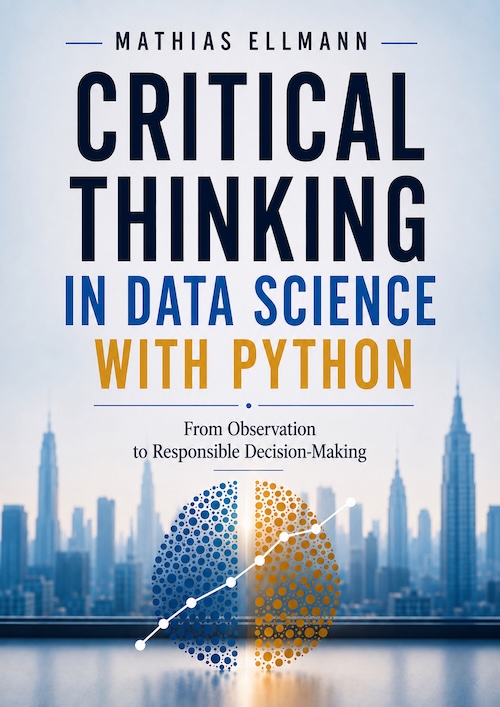
ISBN: 978-3-695-26289-2
Data Science is often understood primarily as a technical discipline. Yet data do not speak for themselves. They must be collected, selected, structured, analyzed, interpreted, and connected to responsible decisions.
Critical Thinking in Data Science with Python presents Data Science as well-founded reasoning with data rather than computation alone.
The book brings together Data Science, statistics, epistemology, argumentation theory, decision science, fairness, transparency, communication, and human responsibility.
Python serves as a practical tool for exploring data, making reasoning processes transparent, testing hypotheses, and evaluating models without replacing human judgment.
The book is intended for students, educators, Data Science beginners, Python learners, Data Analysts, Data Scientists, software developers, managers, decision-makers, project teams, IT consultants, and anyone who wants to understand and use data critically and responsibly.
The English-language eBook edition of Critical Thinking in Data Science with Python is available from Amazon, Apple Books, Thalia, Hugendubel, and eBook.de.
Why data are representations rather than reality itself, how measurement frames shape what becomes visible, and why observation, description, and explanation must remain distinct.
How factual claims differ from interpretations and evaluations, and why conflating these levels leads to weak arguments and poor decisions.
How patterns give rise to hypotheses, why correlation is not automatically causation, and how uncertainty limits the conclusions that data support.
Deductive, inductive, and abductive arguments, along with common fallacies and cognitive biases that can distort Data Science.
Using pandas, descriptive statistics, visualizations, and hypothesis tests to make analytical reasoning transparent and reproducible.
Target variables, train-test splits, confusion matrices, ROC, AUC, overfitting, and the difference between strong metrics and sound decisions.
Applying PrOACT, comparing alternatives, assessing risks, and justifying recommendations rather than treating model outputs as decisions.
Bias before and within models, competing fairness criteria, transparency, traceability, trust, automation, accountability, and human responsibility.
The Information Iceberg—point, information, meaning, and intention—as a framework for precise, transparent, and responsible communication.
An English-language presentation accompanying Critical Thinking in Data Science with Python is currently being prepared.
It will introduce data and reality, facts and interpretations, hypotheses, argumentation, uncertainty, Python, model evaluation, PrOACT, bias and fairness, human responsibility, and the Information Iceberg.
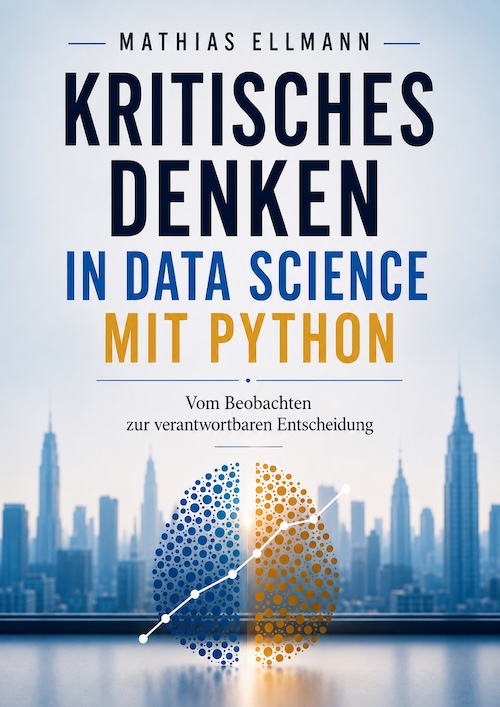
The German edition of Critical Thinking in Data Science with Python: a book about data, models, hypotheses, uncertainty, fairness, responsibility, and Python as a tool for reflective data analysis.
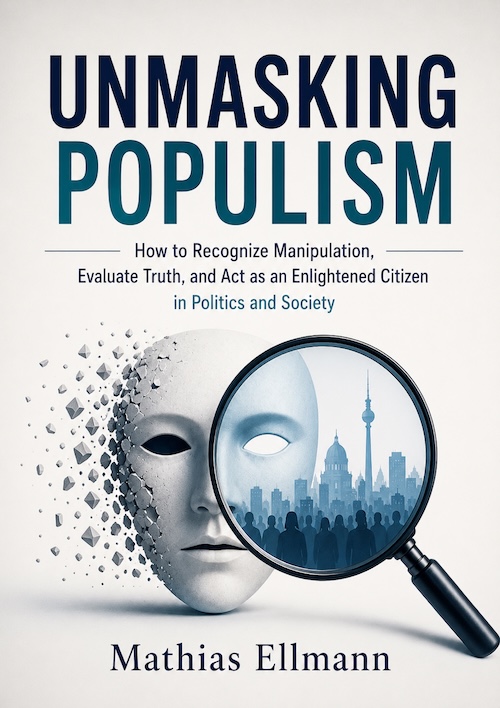
A book about recognizing manipulation, evaluating truth, examining political communication, and strengthening democratic judgment.
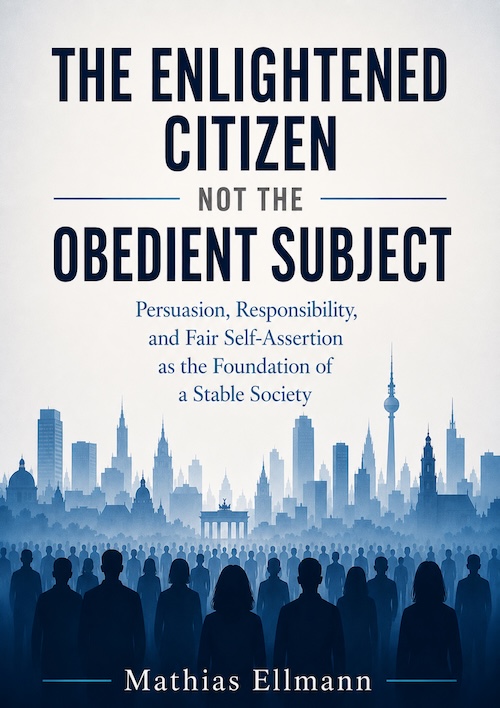
A book about persuasion, responsibility, Fair Self-Assertion, legitimate power, democracy, and stable social order.
A practical book about clarity, respect, responsibility, boundaries, and expressing one's position without dominance, manipulation, or submission.
The book presents Data Science as well-founded reasoning with data and connects observation, interpretation, hypotheses, argumentation, models, uncertainty, decisions, fairness, communication, and responsibility.
Yes. It is intended for students, educators, beginners, Python learners, practitioners, and decision-makers who want to understand Data Science critically and responsibly.
It helps people examine assumptions, distinguish observations from explanations, recognize uncertainty, avoid reasoning errors, evaluate models appropriately, and justify decisions responsibly.
Python is used for understanding data with pandas, reading descriptive statistics critically, creating visualizations, testing initial hypotheses, and evaluating models.
PrOACT makes problems, objectives, alternatives, consequences, trade-offs, uncertainty, risk tolerance, and linked decisions explicit.
It is a communication framework that distinguishes point, information, meaning, and intention, helping analytical communication become clearer and more responsible.
The content can be adapted as a lecture, workshop, or moderated reflection format for universities, companies, educational institutions, Data Science teams, managers, and organizations.
The focus is on practical questions: What can data actually show? How can hypotheses and models be evaluated critically? How should uncertainty be communicated? How can alternatives and risks be compared? And where does human responsibility remain when analytical systems support decisions?
For enquiries about books, lectures, training programmes, or professional collaboration: